
XPeng’s Turing Silicon and VLA 2.0: How a Chinese EV Maker Turned Itself Into an AI Supplier
Twelve months ago, XPeng was still boxed into the “smart-EV pure play” category. Halfway through 2026, that label no longer holds. In-house Turing chips are shipping across four vehicle families, an end-to-end vision-language-action driving model is running in production cars, a Robotaxi is rolling off the Guangzhou line, and Volkswagen has signed on as the first external Turing customer. What used to be an automaker is starting to look like an AI silicon and software supplier that also happens to build EVs.
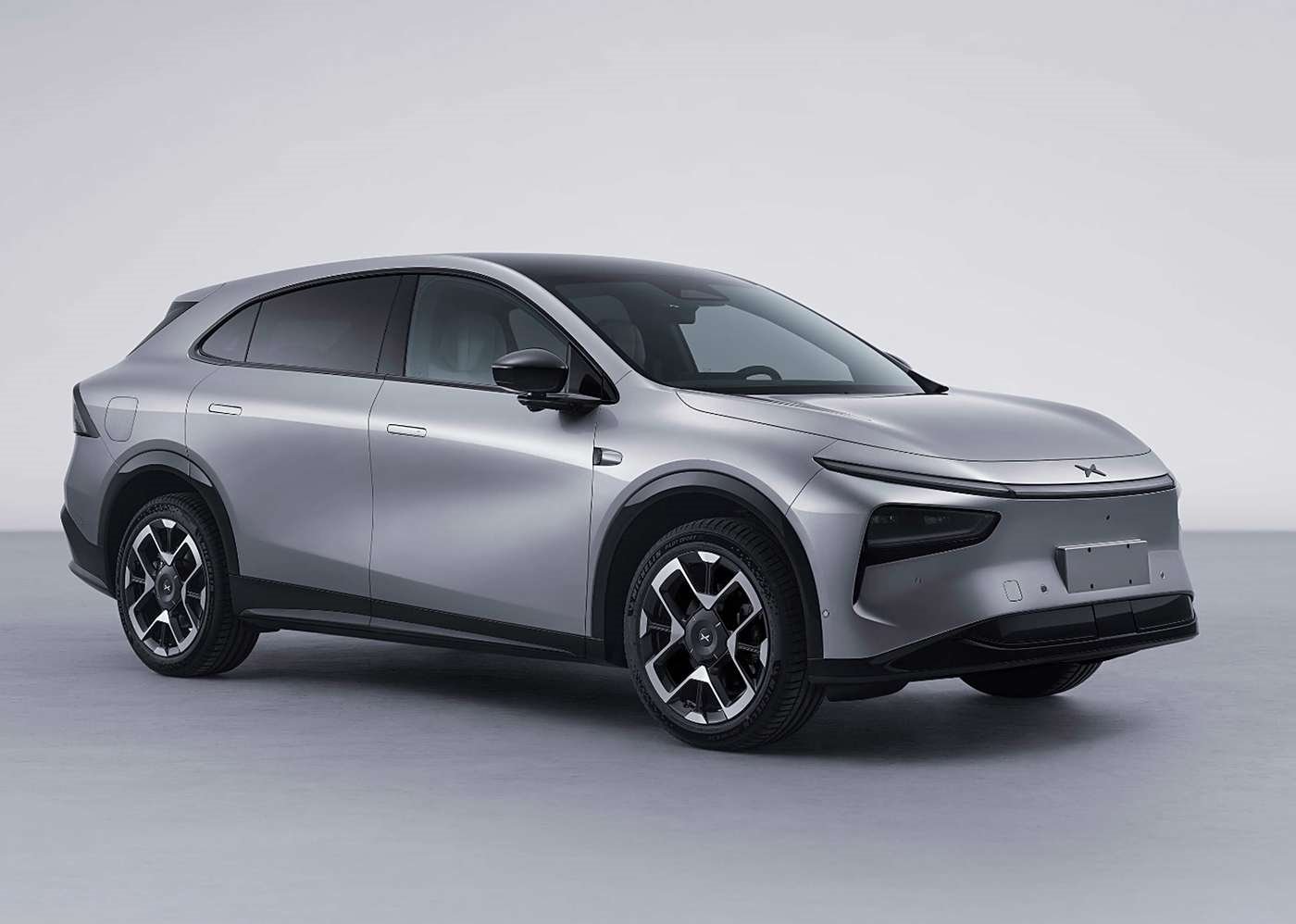
Turing at Scale: 750 TOPS Per Chip, 3,000 TOPS on the Robotaxi
Turing is XPeng’s flagship in-house automotive AI chip. Each SoC delivers roughly 750 TOPS of sparse compute. The Guangzhou-built flagship-GX Robotaxi runs four Turing chips in parallel for close to 3,000 TOPS — well above Nvidia’s Drive Thor at 700 TOPS and Tesla’s HW4 at approximately 250 TOPS. Lower trims use one or two chips depending on ADAS specification. Turing is now in serial production across the sub-RMB-150,000 MONA M03 sedan, the mid-size G7 SUV, the X9 MPV and the flagship GX platform.
VLA 2.0 in Production: A Single End-to-End Stack
XPeng’s public OTA of VLA 2.0 landed in March 2026, replacing the older perception-planning-control pipeline with a single end-to-end vision-language-action neural network. Compared with the prior NGP stack, XPeng disclosed a roughly 99% reduction in hard-brake events and around 23% efficiency gains in equivalent driving conditions. The Beijing “no-takeovers” 40-minute demo on a P7 Ultra generated the most viral coverage, but the more structural signal is that XPeng has joined Tesla in shipping a single-model end-to-end stack in a production vehicle, while Huawei, Momenta, BYD and Nvidia partners still run hybrid stacks in 2026.
Volkswagen Signs On: The Chipmaker Turn
The most strategically loaded item in the recent disclosure is Volkswagen confirming itself as the first external Turing licensee. Two implications matter: XPeng crosses from OEM-with-a-chip to automotive silicon supplier, and Turing has cleared VW’s supplier due diligence at automotive-grade level. For deeper context on the Guangzhou line, the H2 2026 global-market P7 sedan, the new global SUV and the MONA export edition, iEVChina’s full XPeng Turing and VLA 2.0 coverage maps the entire 2026 lineup sweep and the three risk lanes worth watching — MIIT regulation, TSMC automotive-grade capacity and the Waymo-style US-China divergence on Robotaxi export.
What XPeng’s Depth Play Means for China’s ADAS Race
The 2024 framing — Chinese OEMs use Nvidia, only Tesla is truly vertical — is no longer accurate. BYD, NIO, Huawei, Xiaomi and XPeng each run their own differently-vertical ADAS stacks in 2026 production vehicles. XPeng’s differentiator is depth: self-designed silicon plus a single-model end-to-end driving stack plus its own Robotaxi vehicle platform. If Turing licensing keeps expanding beyond Volkswagen, XPeng could become the first Chinese automaker to sell more silicon than it consumes.
Edited for madeinchinanews.com
Source: evmagazine.eu / lbkrs.com / aimona.com
Comments are closed.