
China’s electric vehicle charging infrastructure has reached 23.1 million outlets as of June 2026, up 43% year-over-year, according to the National Energy Administration (NEA). The expansion — driven primarily by a 50% surge in private charging points to 18 million units — signals that China’s charging network is scaling faster than the vehicle fleet itself, gradually eliminating range anxiety as a barrier to NEV adoption.
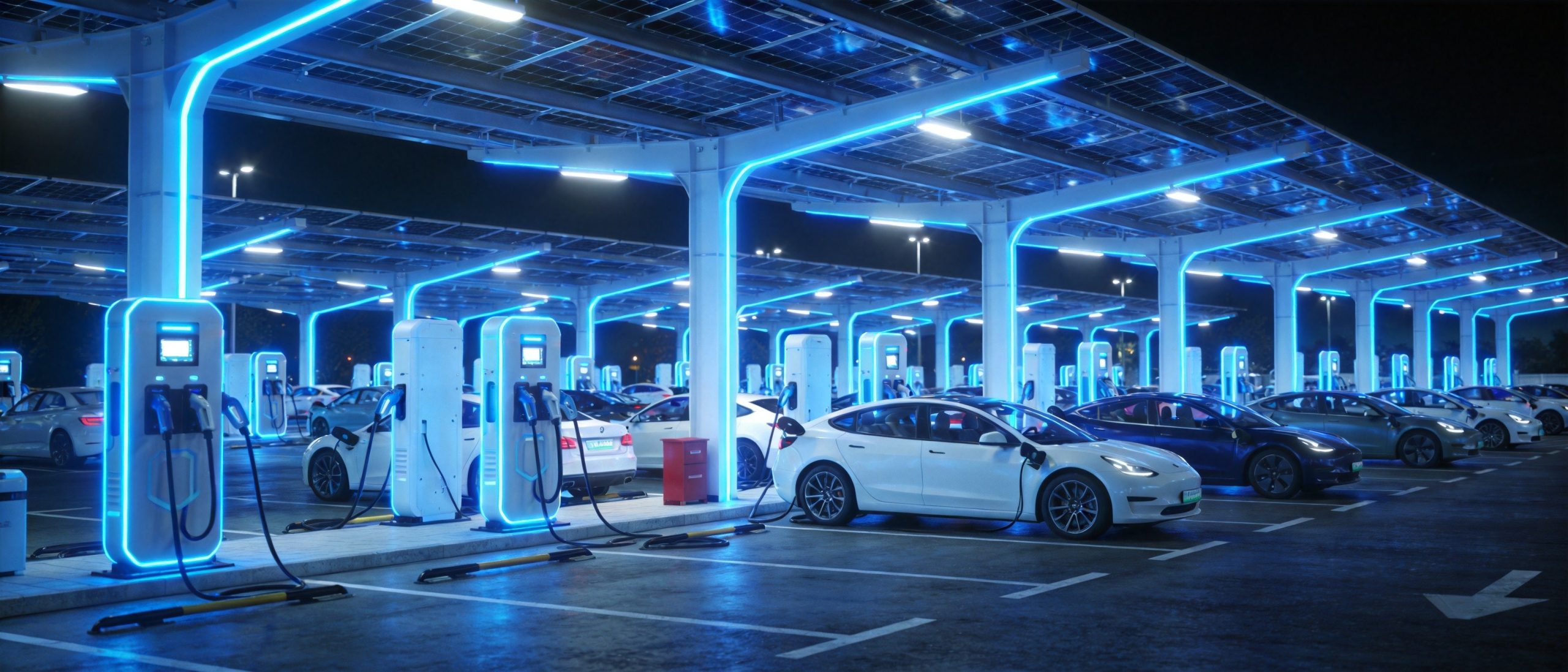
With approximately 45 million active NEVs on Chinese roads, the ratio now stands at roughly 1.95 NEVs per charging outlet — dramatically better than the EU’s 15:1 and the US’s 20–25:1 ratios for public charging. Even accounting for China’s higher proportion of private home chargers, the infrastructure advantage is substantial.
Private Chargers: The 18 Million Strong Army
The private charging segment dominates in volume, with 18 million home-installed wallboxes and portable chargers operating at a combined capacity of 155 million kVA. These are predominantly 7–22 kW units owned by individual EV owners. The surge tracks directly with NEV penetration crossing 65% in July 2026, as increasing numbers of first-time EV buyers install their first home charger. The private charger growth is a direct consequence of China’s housing patterns — unlike Europe or the US, where apartment living limits home charging, China’s rapid urbanization has been accompanied by mandatory EV charger installation requirements in new residential developments.
Public Charging: The Fast-Charging Revolution
While private chargers lead in quantity, the public charging network is evolving in a strategically more important direction: faster speeds. The NEA noted significant quality improvements across the network, with high-power fast-charging systems being deployed at an accelerating rate nationwide.
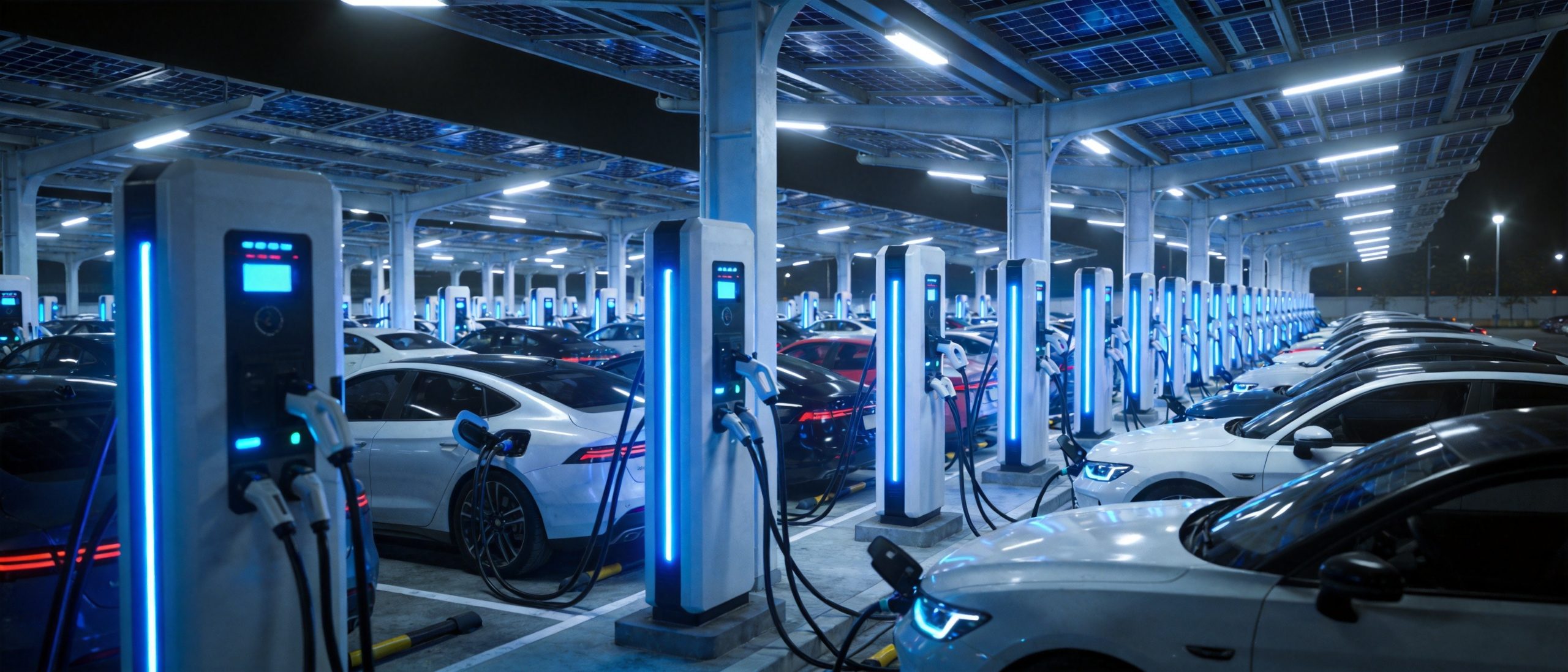
Several market forces are driving this shift. The 800V vehicle architectures from brands like XPeng, Zeekr, and BYD’s newer models require 250+ kW chargers to realize their charging speed potential. Fleet operators — including ride-hailing and logistics companies — are deploying dedicated fast-charging depots with 350–600 kW units. Meanwhile, government subsidies have shifted from rewarding charger quantity to rewarding power output, further incentivizing the upgrade cycle.
Electricity Demand: A New Demand Driver
Complementing the infrastructure buildout, China’s EV charging electricity demand surged 56.9% in H1 2026 to 81 billion kWh — equivalent to the annual consumption of approximately 7 million Chinese households. This figure demonstrates that transport electrification is emerging as a major electricity demand driver for the first time.
Both State Grid and China Southern Power Grid have announced multi-year investment programs to deploy ultra-fast 600 kW+ chargers along major highway corridors. The convergence of utility-scale and private-sector investment suggests China’s charging network could exceed 30 million outlets by end of 2027.
iEVChina’s full analysis of China’s EV charging network expansion
Source: National Energy Administration (NEA); China Electric Vehicle Charging Alliance (EVCIPA)
Edited for madeinchinanews.com
Comments are closed.