
Chinese Automakers Are No Longer Just Shipping Cars — They Are Building Ecosystems Abroad
China exported 2.355 million new energy vehicles in H1 2026, up 120% year-on-year from 1.070 million units, according to the China Association of Automobile Manufacturers (CAAM). But the headline number only tells part of the story. The real transformation is strategic: Chinese automakers have shifted from simple product exports to building factories, licensing technology, and constructing entire EV ecosystems in foreign markets.
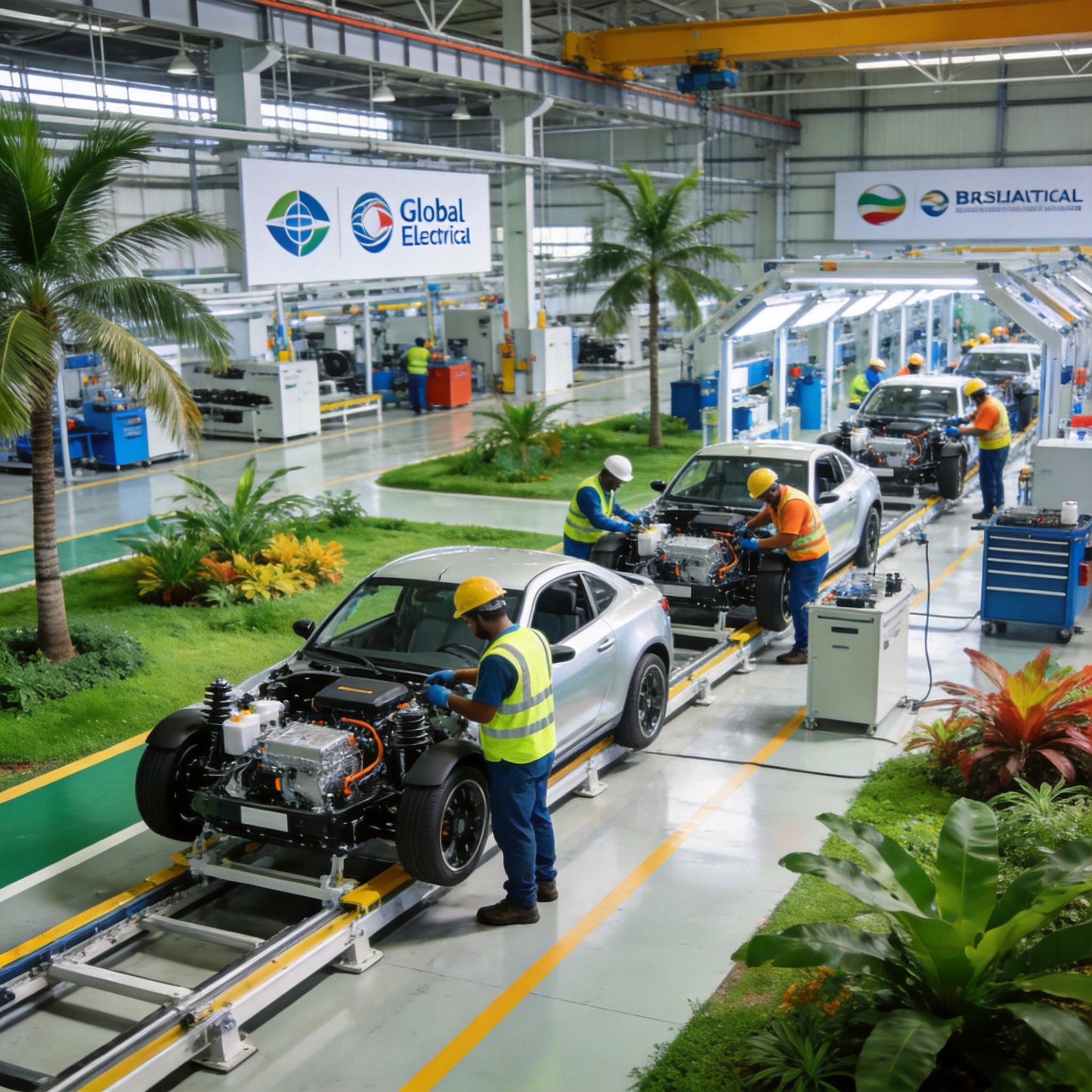
The Full-Chain Expansion Model
Xinhua News Agency described the shift as a move from “product exports to localized, ecosystem-driven global development.” XPeng delivered over 45,000 overseas vehicles in 2025 (up 96% YoY), with plans to cover Latin America by 2028. GAC Group exported 121,500 vehicles under its own brands in H1 2026 (+132% YoY), targeting 250,000 for the full year and 1 million by 2030 across 120 countries. BYD has gone further still — licensing its e-platform 3.0 to Toyota, supplying blade battery technology to Hyundai, and getting seven ASEAN nations to adopt its EV charging standard.
Technology Licensing: A Historic Reversal
Perhaps the most striking development is the emergence of technology licensing as a major revenue stream. BYD providing core EV platform technology to Toyota represents a historic reversal — a Chinese automaker supplying the world’s largest carmaker. Similarly, XPeng is supplying its autonomous driving system and Turing AI chip to Volkswagen for global deployment. These deals signal that Chinese EV technology is now seen as competitive with, or superior to, legacy offerings.
Europe as the Key Battleground
European data underscores the competitive pressure. BEV registrations surged 52% in June 2026, with Chinese brands growing an even faster 118%. In the UK, Chinese EV brands captured 5.4% market share in H1 2026, up from 2.1% a year earlier. XPeng plans 8,000 sales in Germany this year, supported by five new model launches and a 110-dealer network.
The 120% export growth is extraordinary in any industry, and becomes even more significant considering China’s total auto production actually declined 4% in H1 2026. Overseas markets are now the primary growth engine for China’s auto industry — a structural shift that will define the sector for the next decade.
For the complete export trajectory, company-by-company breakdown, and investment implications, read iEVChina’s full analysis of China’s NEV export playbook.
Sources: CAAM H1 2026 Auto Export Data (caam.org.cn); Xinhua News Agency (english.news.cn); CCTV English (english.cctv.com)
Comments are closed.