
EREV Is No Longer a Bridge — It Is Becoming China’s Dominant Family-Car Powertrain in 2026
Extended-range electric vehicles were supposed to be a stepping stone. Instead, they have become the fastest-growing powertrain in the world’s largest auto market. China’s H1 2026 EREV sales have surpassed 1.8 million units — over 12% of all new energy vehicle sales — with brands like Li Auto, Xiaomi, AITO (Huawei), Leapmotor, and Deepal all betting their family-car strategies on the technology. The implications stretch far beyond China’s borders.
Why EREV Keeps Winning Over Pure BEV
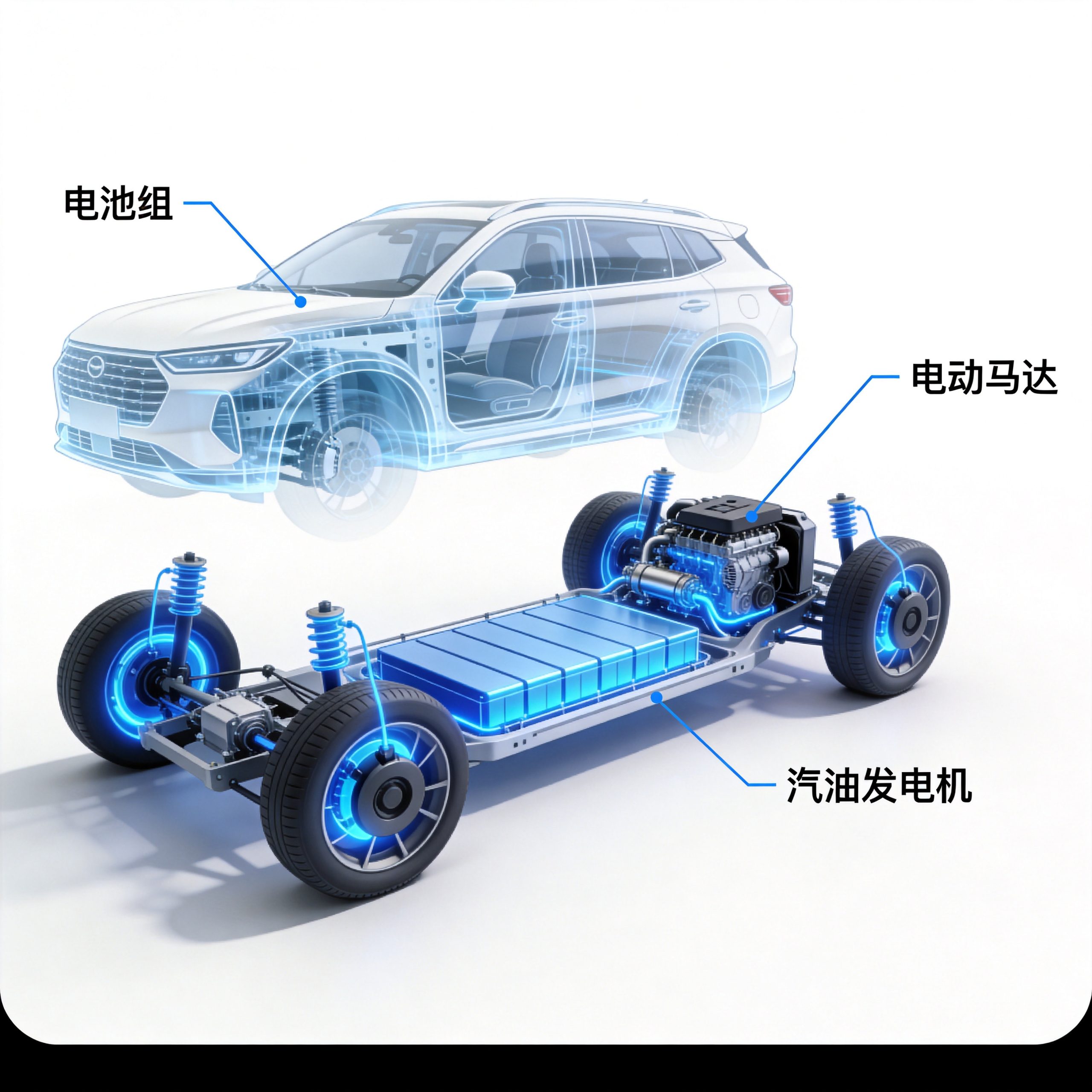
The formula is simple: wheels driven only by electric motors for a pure EV feel, backed by an onboard generator that eliminates range anxiety entirely. Buyers get 200–500 km of electric-only daily commuting — enough for 95% of trips — plus a total range exceeding 1,500 km. For consumers without reliable home charging, this is the pragmatic electrification path that pure BEV cannot match.
The 2026 twist is battery size. Xiaomi’s SkyNomad N90 now packs 76 kWh — larger than many pure BEVs — pushing electric-only range to 505 km CLTC. The generator becomes a road-trip safety net rather than a daily necessity. iEVChina’s full coverage maps out the competitive landscape across six major Chinese brands and their EREV battery specs in detail.
From China to the World: EREV as Export Strategy
For Southeast Asia, Latin America, the Middle East, and Africa — regions where charging networks are still developing — EREVs offer a compelling electrification pathway that does not require customers to change their refueling habits. Leapmotor’s C10 EREV is already selling in Brazil; Deepal’s S05 REEV variant is launching in Indonesia. Even Toyota’s China joint ventures are reportedly evaluating EREV architectures, a stunning reversal from the company’s long-standing hybrid-and-hydrogen strategy.
The data is clear: EREV growth rates are consistently outpacing BEV growth in China, and the technology is spreading to export markets. For the next five years, extended-range will be the bridge that carries the majority of Chinese auto buyers from combustion to electric — and the brands mastering it are positioning themselves for global expansion.
Source: Industry reports + manufacturer data (July 2026)
Comments are closed.