
Four Cohorts Now Own 70% of China’s Premium EV Market in 2026 H1 — HIMA, NIO, Li Auto, Xiaomi
China’s premium electric-vehicle market crossed an important threshold by mid-2026: just four operator groups — Huawei’s HIMA portfolio, NIO with its Onvo and Firefly sub-brands, Li Auto’s L-series plus i-series lineup, and Xiaomi Auto’s SU7 and YU7 duo — now capture more than 70 percent of all new-energy-vehicle deliveries priced above 250,000 RMB. Each cohort entered the year with a distinct playbook, and the H1 numbers make it clear which strategies scale fastest at premium average selling prices.
Key Highlights
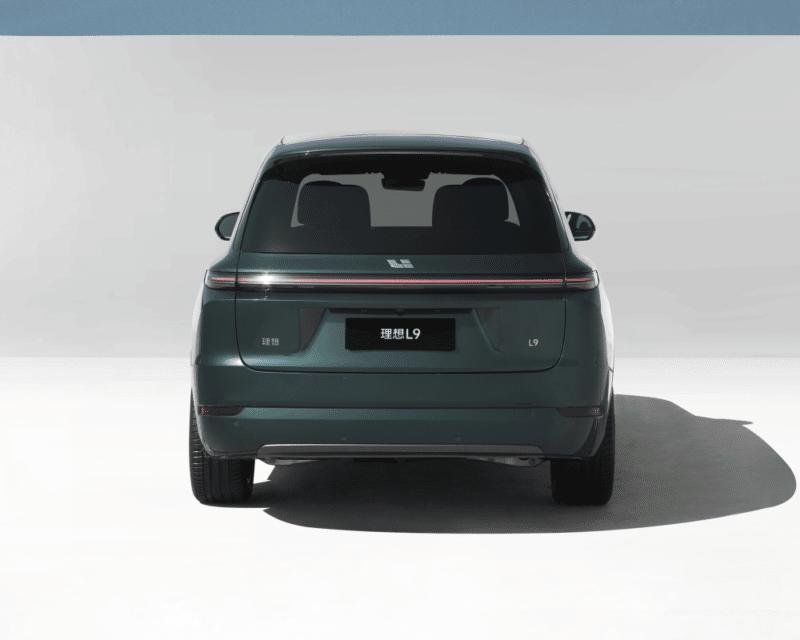
HIMA continues to lead on monthly volumes, with Huawei reporting cumulative deliveries above 800,000 units across AITO, Stelato, Maextro and Luxeed and a current run-rate trending toward 60,000 cars per month combined. The Maextro S800 launched commercially in late May 2026 to anchor the 1-million-RMB tier against Mercedes-Maybach and Bentley. NIO’s three-brand stack now spans 130,000 to 1,000,000 RMB, with the Onvo L90 large six-seat SUV sustaining 6,000-plus monthly deliveries since March. Li Auto held the cohort’s profitability crown with 8-percent-plus net margins, while ASPs lifted to roughly 318,000 RMB after the L9 facelift and i8 BEV launch. Xiaomi’s YU7 SUV booked more than 280,000 reservations in its first 24 hours of order-taking, the fastest pre-order accumulation in Chinese EV history.
Why It Matters
The cohort consolidation thesis is now visibly playing out. Independent premium brands without scale — BYD’s Yangwang, GAC’s Hyptec and several stand-alone BAIC nameplates — are struggling to match HIMA’s software depth, NIO’s swap-station moat, Li Auto’s profitability buffer, or Xiaomi’s user-acquisition cost. Each of the four winners runs a different competitive structure: HIMA’s vertical platform play across four OEM partners, NIO’s three-brand portfolio plus 3,000-plus swap stations, Li Auto’s EREV preservation hedged with a pure-BEV i-series, and Xiaomi’s single-platform Modena thesis funneled through Mi Home retail. With the SU7 and YU7 sharing motors, packs and stores, Xiaomi posts the cohort’s lowest customer-acquisition cost while skewing the youngest demographic at a median age of 33.
What’s Next
The H2 2026 question is whether any fifth cohort — Geely’s Zeekr/Lynk/Galaxy stack, Great Wall’s Wey, or BAIC’s standalone brands — can reach critical mass before the four-cohort hierarchy fully crystallizes. Xiaomi’s production-capacity expansion will be the most-watched variable, with the Beijing Phase-2 plant at 300,000-unit annual capacity still implying a 30-week wait for YU7 reservations and a Phase-3 facility under evaluation in Wuhan or Hefei for 2027 commissioning. For the full segment-by-segment volume table including HIMA brand splits and Onvo L90 delivery curves, see iEVChina’s full China premium EV cohort coverage.
Source: Huawei HIMA press, NIO IR, Li Auto IR, Xiaomi Auto press, China Passenger Car Association (CPCA), autohome.com.cn.
Comments are closed.