
When the Israel Vehicle Importers Association released its January–July 2026 registration data on August 2, the message was unmistakable: a Chinese automaker had outsold Tesla in one of the Middle East’s most competitive EV markets. XPeng delivered 3,503 electric vehicles in the seven-month window, edging Tesla’s 3,162 units to claim the number-one EV position. Changan followed in third with 2,318 units. Collectively, Chinese brands now hold over 70% of Israel’s EV market.

China Outsells Korea and Japan — Combined
The dominance extends well beyond electric vehicles. Across all powertrain types, Israeli buyers purchased 90,206 Chinese-manufactured vehicles in the first seven months of 2026. South Korean brands (Hyundai, Kia) managed 32,728 units combined; Japanese brands (Toyota, Honda, Mazda, Nissan, Subaru) totaled just 20,981. Chinese brands alone outsold both groups put together.
Chery led the overall market outright with 46,542 total sales — nearly 2.5 times the volume of second-place Toyota (19,028). Hyundai placed third with 18,023. Chery’s strength spans its ICE and PHEV SUV lineup sold under the Chery, Omoda, and Jaecoo badges.
Why Israel Is a Bellwether Market
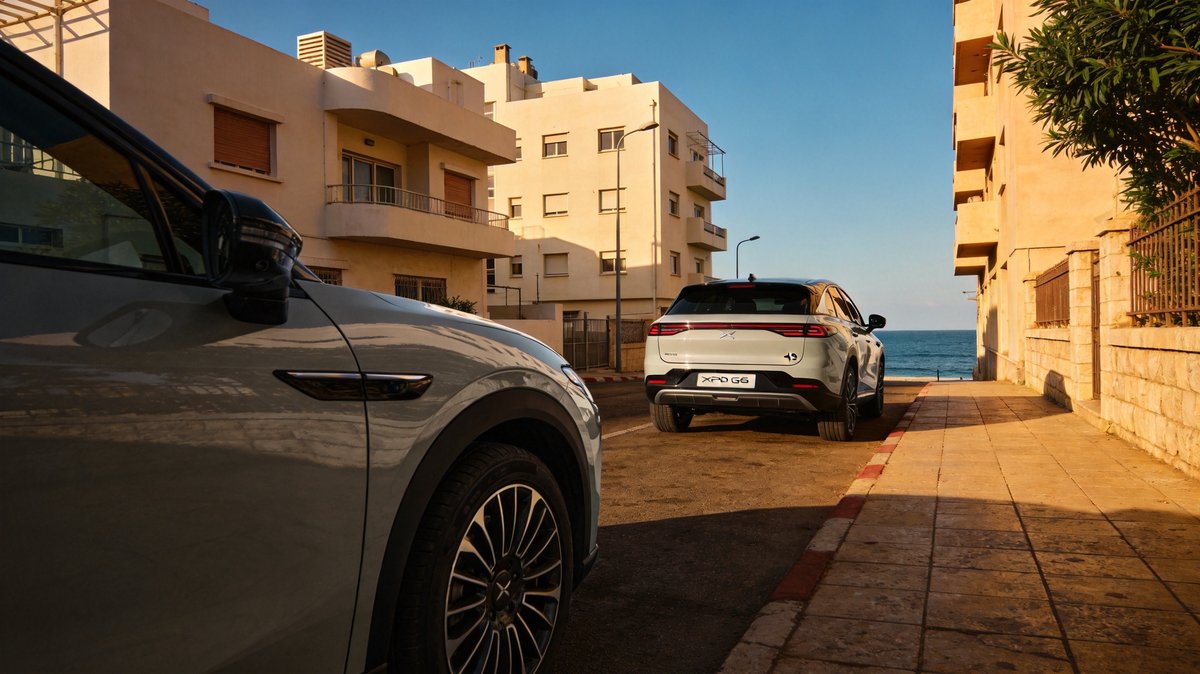
Israel offers Chinese EV makers an unusually open playing field. The country has no domestic auto industry to protect, applies tariffs uniformly, and maintains one of the densest fast-charging networks per capita in the world. Its compact geography — just 424 km from north to south — eliminates range anxiety, and Israeli consumers have a track record of early technology adoption.
XPeng’s Israeli lineup includes the G6 and G9 crossovers, the P7 sedan, and the X9 luxury minivan, priced competitively against Tesla while substantially undercutting European premium EVs. The result is part of a broader international push: XPeng has expanded into Norway, Sweden, Denmark, the Netherlands, and Germany, with the MONA L03 slated for 65 countries. Global cumulative deliveries surpassed 1.2 million units in July, including roughly 105,200 overseas.
The Israeli data may cover a small market of about 300,000 annual new-vehicle sales, but it serves as a leading indicator. When Chinese brands compete on equal footing — open trade, no domestic manufacturing lobby, tech-receptive consumers — they can outperform both Tesla and the established Japanese and Korean incumbents. For the full breakdown of XPeng’s global strategy and market-share analysis, see iEVChina’s full coverage.
Source: Xinhua, August 2, 2026; Israel Vehicle Importers Association official data; XPeng global delivery report, July 2026; Chery Group sales data.
Edited for madeinchinanews.com
Comments are closed.