
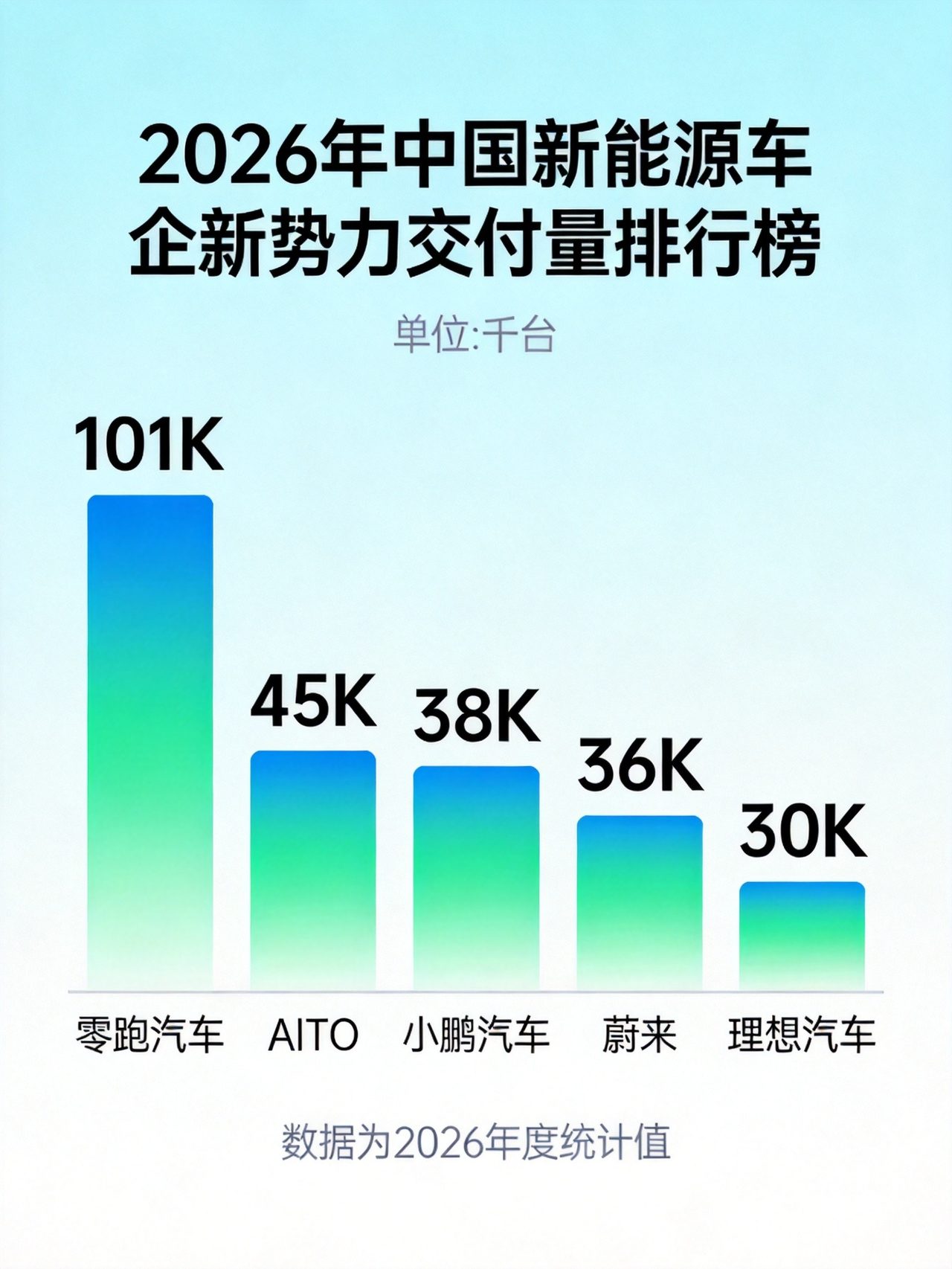
China’s electric vehicle startups just delivered their strongest July on record, and one name has crossed a threshold no rival has reached before. Leapmotor pushed past 100,000 units in a single month, becoming the first pure-play Chinese EV startup to break that milestone. The result reshapes the league table heading into the second half of 2026 — and exposes who is pulling away, who is holding on, and who has started to slip.
Leapmotor Crosses the 100K Line
Leapmotor delivered 101,267 vehicles in July 2026, a 102% jump from a year earlier. The surge is powered by two engines: aggressively priced C-series SUVs in the ¥130,000–200,000 band, and the Stellantis distribution partnership that is opening European showrooms to a brand few Western buyers had heard of 18 months ago.
What matters for global competitors is that this is not a one-month pop. Leapmotor is now on track for 1.0 to 1.2 million units for the full year — which would make it the first Chinese EV-only startup to crack the million-vehicle annual mark. At that scale, it moves from “challenger” to “volume incumbent,” with the procurement and export leverage that comes with it.
The 35K–45K Cluster Tells Different Stories
Behind Leapmotor, a tight pack of four brands sits between 34,000 and 45,000 units, but their trajectories diverge sharply.
NIO delivered 35,934 units across its three-brand family, up 71% year over year. The ONVO mass-market brand contributed 10,155 and the Europe-focused firefly added 5,771, validating a “ladder” strategy that stretches from premium NIO down to compact EVs. XPeng, in transition from G6/G9 to the new P7+ and G9L, delivered 38,027 units (+4%) and crossed 1.2 million cumulative sales. Aion (GAC) posted 34,987 (+31.7%) on five straight months of double-digit growth, with exports quietly adding volume.
AITO’s 45,046 looks like a decline (-5.7%), but the number masks a model handover: the original M9 is being phased out as the redesigned M9 ramps, with the new version already past 20,000 deliveries in seven weeks.
The Stall Zone and What Comes Next
Li Auto delivered 30,468 units, its third consecutive month of year-over-year decline. The EREV-only strategy that once defined the brand is losing its protective moat as pure-EV range passes 800 km and charging reaches county-level markets. Xiaomi held above 30,000 for a second straight month — a remarkable pace for a carmaker under two years old — and is expected to climb toward 40,000 once the Pengcheng EREV SUV launches in the fourth quarter.
Combined, Chinese EV startups are now on pace to exceed 4 million units in 2026, roughly 15% of the country’s total NEV market. Two years ago that share was under 8%.
For the full breakdown of every brand — including the emerging EREV-versus-pure-EV split, the export advantage, and full-year projections for each startup — see iEVChina’s full coverage.
Source: Leapmotor, NIO, XPeng official delivery reports (2026-08-01); CPCA Monthly NEV Delivery Tracker (2026-08-02).
Edited for madeinchinanews.com
Comments are closed.