
Huawei’s Qiankun Unit Plots Three ADS 5 Waves — What It Means for China’s Autonomous-Driving Arms Race
Huawei’s intelligent-driving subsidiary, Qiankun (also branded Yinwang), has laid out a structured three-phase deployment for its next-generation ADS 5 platform. The rollout begins with V5.0 going live in July 2026, followed by V5.1 in September-October 2026, and concludes with V5.2 in early 2027 — a phased plan that Huawei says will touch more than 1.9 million vehicles across 25-plus partner brands.
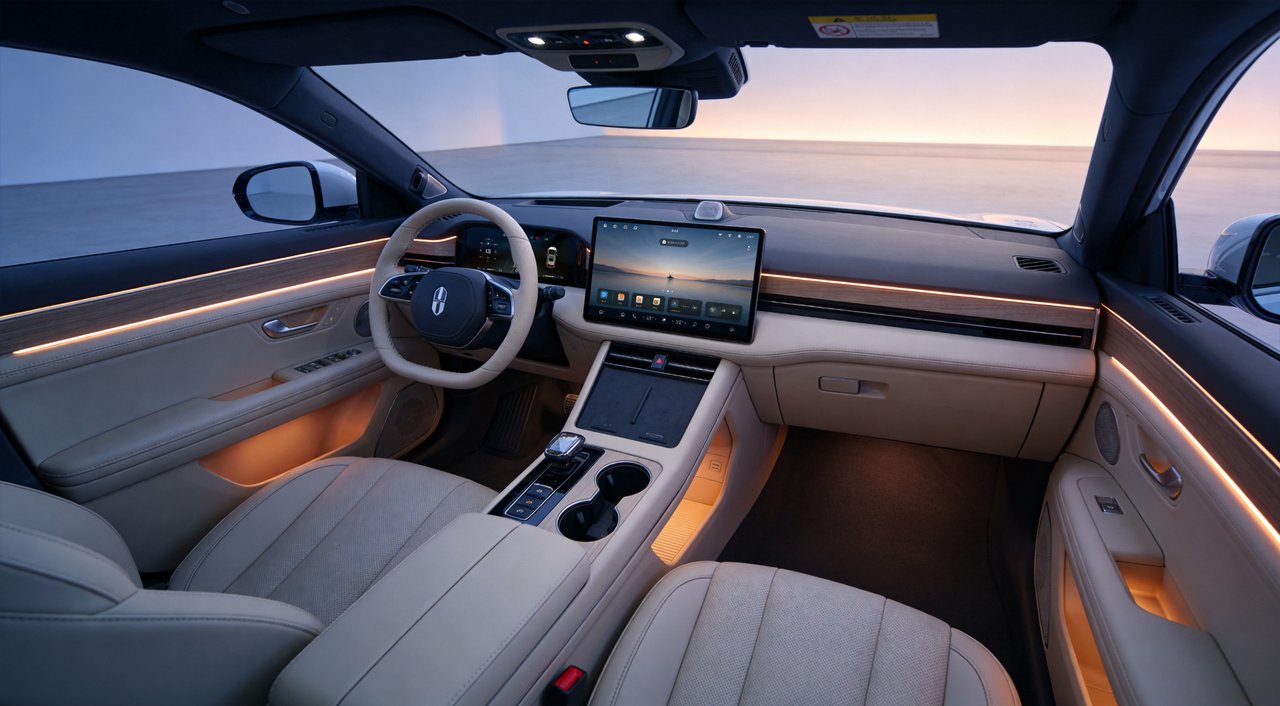
The announcement, confirmed on July 17, 2026, is significant less for the timeline itself and more for what it signals about where China’s premium ADAS market is heading as regulatory discussions around L3 certification intensify. For a deeper look at the full technical breakdown, iEVChina’s full coverage walks through every wave in detail.
Wave One: V5.0 Establishes the Baseline
V5.0, already deploying to AITO M9, Maextro S800, Stelato G9 and Luxeed R7 owners, brings the full urban-noa and highway-noa stack built on Huawei’s redesigned end-to-end perception-and-planning architecture. This is the transition from ADS 4 to ADS 5 — not an incremental patch but a structural rewrite of the underlying model, according to Huawei’s briefing.
Wave Two and Three: Toward “Better Than Human” Claims
V5.1 targets complex extrication scenarios — construction zone lane changes, non-standard traffic signals and multi-lane merge negotiation. V5.2 is the most ambitious: Huawei’s stated goal is that emergency-escape performance (collision-imminent evasion, aggressive lane-departure response, multi-vehicle threat cascades) exceeds competent human-driver benchmarks.
If verified, this would represent a meaningful threshold in the L2-to-L3 regulatory conversation. Chinese regulators have been cautious about certifying hands-off L3 on public roads, and a data-backed claim of superhuman emergency performance would strengthen any supplier’s certification case.
The Installed-Base Advantage
The three-wave plan carries extra weight because of Qiankun’s deployment scale. Cumulative installations passed 1.9 million vehicles as of mid-July 2026, with the two-million mark expected by late August 2026. Assisted-driving mileage has crossed 12.8 billion kilometres, projected to exceed 20 billion by year-end. No other single-brand Chinese ADAS supplier operates at this data volume, giving Huawei’s model training a compounding advantage.
Against Tesla FSD (expected in China Q4 2026), XPeng XNGP V6.0 (late 2026) and Xiaomi HAD 2.0 (early 2027), Huawei’s phased approach delivers continuous capability updates rather than a single release — a customer-perception and iteration-confidence advantage in what is rapidly becoming the most competitive ADAS market in the world.
Source: coze.cn / gasgoo.com / cnevpost.com
Comments are closed.