
Denmark H1 2026: Chinese-Linked EV Brands Take 1 in 5 Registrations Before Copenhagen’s Zero-Emission Zone Even Activates
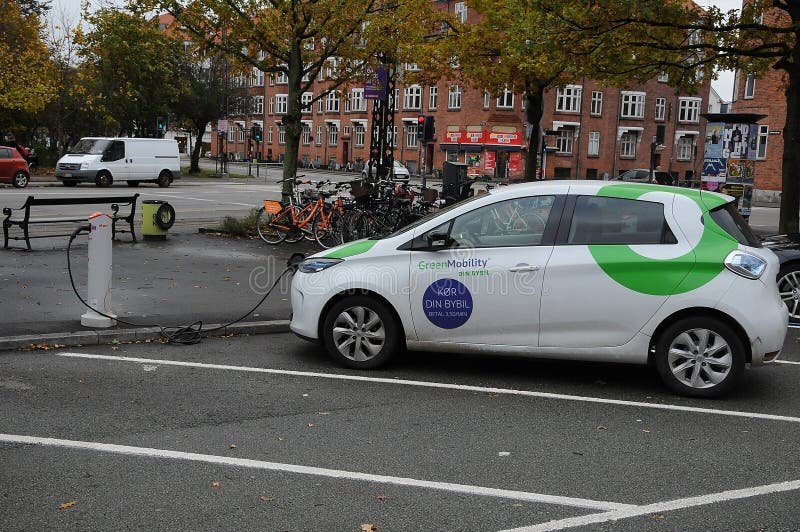
Denmark has quietly become the third pillar of the Nordic Chinese-EV story. Through the first half of 2026, Chinese-owned or Chinese-linked brands captured roughly 22 percent of Danish BEV registrations, up from 18 percent a year earlier. Copenhagen’s zero-emission zone has not yet fully activated, so the H1 share reflects structural pull, not a policy pulse. For madeinchinanews readers tracking how Made-in-China mobility scales across Europe, Denmark is the closest thing to a controlled experiment: no Norwegian-style subsidy stack, no Swedish-style Volvo home-market anchor, and yet the share keeps climbing.
Key Highlights: MG Leads at 4,200 Units, Volvo Second, BYD Ramping Fast
Total Danish BEV registrations reached about 42,000 units in H1 2026, growing 18 percent year over year against a European average of 14 percent. Inside that pool, SAIC-owned MG led Chinese-linked volume with roughly 4,200 registrations — the MG4 alone contributed 2,500 units and the MG ZS EV another 1,200. Geely-owned Volvo, still perceived by Danish buyers as European, added about 3,600 registrations led by the EX30. BYD contributed roughly 1,100 units across Dolphin Surf, Atto 3, Seal, Han, and Tang. Polestar added 250 and Zeekr 100. Read iEVChina’s full Denmark H1 2026 breakdown for brand-by-brand pricing and dealer-network detail.
Why It Matters: Denmark Sits Between Sweden’s Volvo Anchor and Norway’s Nordic Ceiling
Norway crossed 30 percent Chinese-linked share in H1 2026, powered by dedicated dealer networks and Nordic Green Fund pilots. Sweden held around 28 percent, anchored by Volvo’s home-market pull. Denmark’s 22 percent is the lowest of the three — but its trajectory is the steepest. Danish buyers historically preferred European badges over direct-import Chinese brands, so the four-point year-on-year gain reflects a real structural shift, not a subsidy pulse. BYD alone opened seven Danish showrooms through H1 across Copenhagen, Aarhus, Odense, Aalborg, Esbjerg, Vejle, and Randers, more than doubling its physical footprint versus H1 2025.
What’s Next: Copenhagen ZEZ, Polestar 4 Estate, Zeekr Nordhavn
Three catalysts stack for H2 2026. Copenhagen’s zero-emission zone fully activates in Q4, projected to lift Danish BEV registrations by 30 to 40 percent as inner-city commuters transition. Chinese-linked brands are positioned to benefit disproportionately given their cost-per-kilometer-range edge. The Polestar 4 Estate — recently spied testing in the UK — is expected to reinforce the premium wagon slot Danish buyers historically reward. Zeekr’s new flagship showroom in Copenhagen’s Nordhavn district opens alongside a stepped-up Q3 export ramp. Adding those base effects, Danish Chinese-linked share should reach 25 to 28 percent by year-end 2026, closing the gap to Sweden and materially narrowing the Norwegian lead.
Edited for madeinchinanews.com
Source: Danish Vehicle Register H1 2026; manufacturer disclosures; cnevpost.com; autohome.com.cn
Comments are closed.