
Chinese EVs Hit 22-24% of Norway’s BEV Pool in H1 2026: The Tariff-Free Cold-Weather Proof Point
Norway is arguably the toughest EV market in the world — not because its buyers are hard to convince (roughly 95 percent of new passenger cars registered in H1 2026 are pure-electric), but because the field is already saturated with proven Western and Korean nameplates and because Norway does not apply the EU’s countervailing duty on Chinese-made EVs. Fresh Norwegian Road Federation (OFV) data through June 2026 shows Chinese-branded and Chinese-JV models capturing approximately 22-24 percent of Norwegian BEV registrations, up from roughly 16 percent a year earlier — a first-time double-digit share in the world’s most saturated EV market.
Key Highlights: BYD, XPeng, NIO, Zeekr and the Geely Umbrella
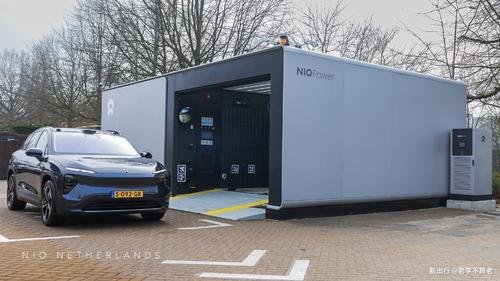
Preliminary OFV rank order for H1 2026 places Polestar first among Chinese-linked brands at around 5,800 registrations, followed by Volvo (about 4,900), BYD (about 2,600), XPeng (about 1,400), NIO (about 950), Zeekr (about 800), Smart (about 700), and MG Motor (about 650). Combined, these eight brands account for roughly 17,800 of the 74,000 total Norwegian BEV registrations. Chinese-market home turf mainstays are anchoring volume: BYD’s Atto 3 and Dolphin lead its Norwegian mix on Blade LFP cold-weather resilience, XPeng’s G6 crossover carries the software-localized ADAS pitch, and NIO’s 12-station Norwegian battery-swap network — up from 8 at year-end 2025 — has become one of the most effective cold-weather DC-fast-charging workarounds in the country.
Why Norway Is the Cleanest Read on Chinese EV Product Merit
Norway matters as a bellwether disproportionate to its 5.5-million population for three reasons. First, zero import tariffs on Chinese-made EVs make it one of the cleanest global reads on whether Chinese brand equity, product design, and after-sales support can win purely on merit. Second, at close to 100 percent BEV penetration, any product-level shortcoming — range anxiety, weak infotainment localization, thin service network — shows up in monthly sales data immediately. Third, Norwegian winter tests thermal management, heat-pump efficiency, and DC-fast-charging cold-soak recovery in a way no Middle East, Southeast Asian, or Latin American market can. The largest remaining gap for Chinese brands is service coverage: VW, Toyota, and Hyundai run 40-60 authorized points nationwide, while BYD currently has 7, XPeng 4, NIO 3, and Zeekr 2. For a brand-by-brand breakdown of product mix, charging integration, and analyst H2 forecasts, see iEVChina’s full data brief on Chinese EVs in Norway.
What’s Next: 27-30% Chinese Share by End-2026
Analysts covering the Nordic auto market project combined Chinese-EV market share in Norway to reach 27-30 percent by end-2026 and 32-35 percent for full-year 2027, driven by wider model availability (BYD Seal U, XPeng P7+, NIO ET9, Zeekr 007, Polestar 5 variants), aggressive 8-15 percent pricing gaps versus Tesla and VW, and expanding service coverage — BYD alone is targeting 12 Norwegian points by year-end.
Edited for madeinchinanews.com
Source: OFV Norway registrations data / Industry reports + manufacturer data (as of July 2026)
Comments are closed.