
How WeRide’s Gulf Robotaxi Economics and 200,000-Unit Lenovo Deal Reshaped China’s L4 Playbook
The Chinese L4 Robotaxi cohort spent 2024 arguing about technology stacks, but 2026 is turning out to be a debate about unit economics — and WeRide is quietly setting the pace. The Guangzhou-based operator’s Q1 2026 numbers, its widening Gulf and European footprint, and a five-year 200,000-vehicle joint program with Lenovo now form the clearest picture yet of how a Chinese L4 operator can scale beyond home-market pilots.
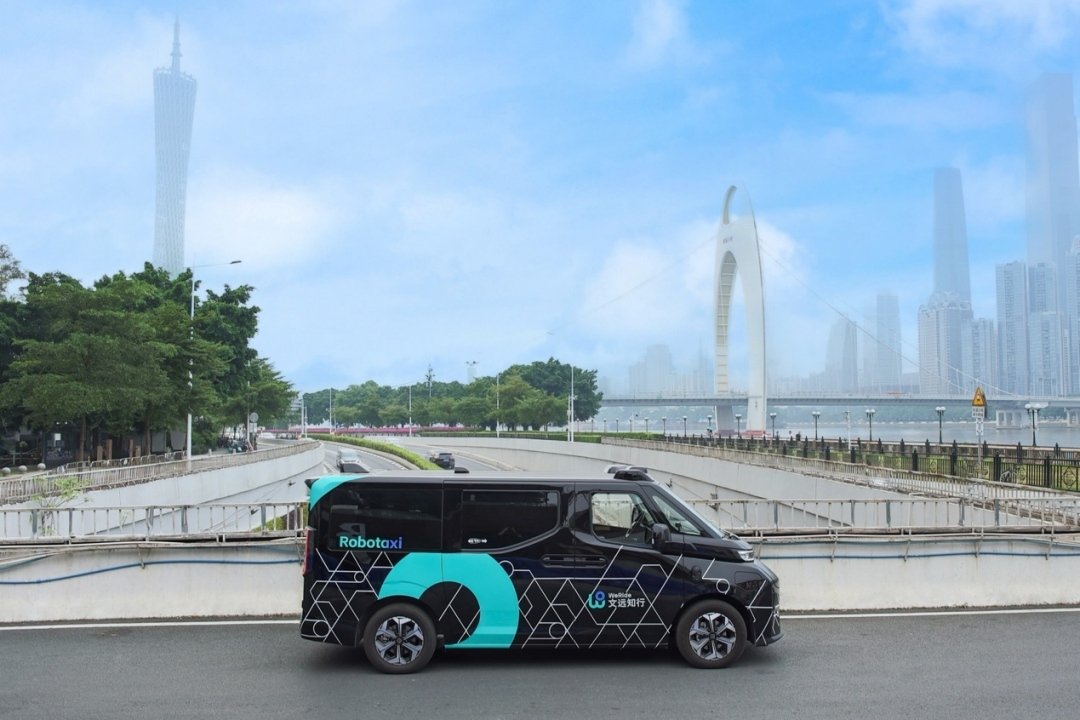
Key Highlights: Q1 Growth, Four Commercial Markets
WeRide reported USD 16.5 million in Q1 2026 revenue, up 58% year-over-year, with product-line revenue climbing 116% on the back of L4 vehicle sales. Gross margin held at 35%, the China fleet crossed 1,000 vehicles, and registered-user volume doubled. The GXR Robotaxi platform now runs commercial-driverless services in four flagship markets — Dubai, Abu Dhabi, Singapore and Slovakia — with active pilots in nine countries by the end of the quarter. That international mix, more than the raw revenue print, is what separates WeRide from most of its domestic peers.
Why It Matters: USD 1/km Gulf Fares and a National-Program Playbook
Abu Dhabi has become the most instructive market on WeRide’s map. Per-kilometer fares run USD 1.00–1.10, roughly three times the domestic China Robotaxi average of RMB 2 per km (~USD 0.28), a premium the operator attributes to tourism demand, longer trips and a tight ride-hail supply. Dubai has capped autonomous vehicle allocation at roughly 3,000 units for the initial 2026 window, making the Gulf a “high-premium proof-of-concept” corridor. Slovakia adds a second layer: WeRide’s Q2 2026 entry there was structured as a country-level smart-mobility program rather than a city pilot, giving the company a template for regulatory-first expansion into Europe. For the full breakdown of GXR configurations, Slovakia’s national program and the Q1 disclosure trail, see iEVChina’s full coverage of WeRide’s global rollout.
What’s Next: Lenovo HPC 3.0 and the 50% ADK Cost Reset
The WeRide + Lenovo joint program, announced on April 27 2026, targets 200,000 autonomous vehicles over five years, using Lenovo’s HPC 3.0 platform for edge compute. Compared with the prior HPC 2.0 generation, HPC 3.0 delivers a 50% reduction in autonomous-driving-kit (ADK) cost and an 84% lifecycle TCO improvement. That cost curve is the structural underpinning of WeRide’s unit-economics thesis, and it slots the operator alongside Pony.ai as one of two Chinese L4 leaders pursuing supplier-plus-integrator alliances rather than pure fleet-partner capital models. Q3 2026 will test whether Lenovo-built volume starts landing and whether Slovakia’s framing becomes a repeatable European template.
Source: kr-asia.com + WeRide investor relations + chinabizinsider.com
Comments are closed.